
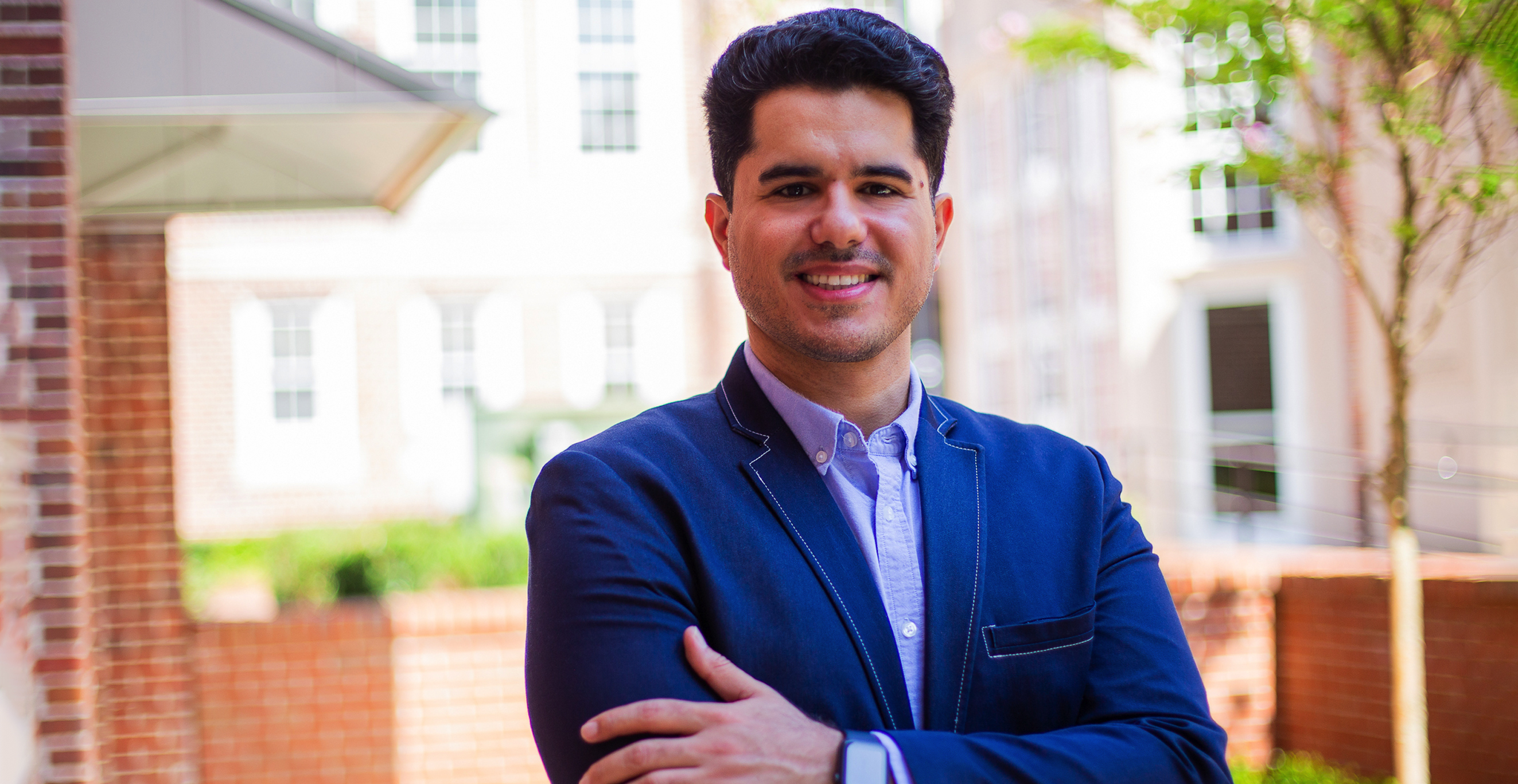
With a passion for creativity and an interdisciplinary background involving learning sciences and technologies, artificial intelligence in education, and durable skills, new faculty member Ahmad Rahimi is excited to help advance the College’s mission of reimagining how people learn.
The College of Lifetime Learning has welcomed Seyedahmad “Ahmad” Rahimi as its first tenure-track faculty member. His interdisciplinary expertise in learning sciences and technologies, artificial intelligence in education, and durable skills like creativity and critical thinking positions him to help advance the College’s mission of reimagining how people learn across every stage of life.
For Rahimi, joining the College feels like finding a place where his research and interests converge.
"I have a mixture of backgrounds in computer science, multimedia, instructional design, psychometrics, creativity, and learning sciences and technologies," he said. "All of this made me be someone who can be the first faculty member in a college called Lifetime Learning."
His journey began in computer engineering before evolving into a deeper exploration of how people learn with technology. Along the way, Rahimi earned advanced degrees in instructional systems and learning technologies, and educational measurement and statistics — areas that are increasingly shaping the future of learning.
“My goal is to design and study learning systems and ecosystems that make lifetime learning possible,” Rahimi said. “That means building the infrastructure for continuous learning while also helping people develop the human capabilities they need to thrive across school, work, and life.”
One interest of Rahimi’s is stealth assessment, an evidence-based method of gathering data from technology-rich learning environments to better understand what learners know and can do in real time.
"We gather interaction data from digital learning environments and make inferences about what learners know and can do so we can provide personalized support," he explained.
He is equally passionate about a topic that is overlooked, especially in STEM education: creativity.
"We have something called creative problem solving," he said. "The goal is not only to solve the problem, but to do it in a way that no one else has done before. Creativity isn't just about the arts. It's about originality, novelty, and finding new solutions."
His work also explores how learners can develop other durable skills while mastering technical subjects. With technology reshaping how people work and learn, Rahimi believes these human capabilities will become increasingly important.
“Creativity, critical thinking, collaboration, human judgement, empathy,” he said. “All of these things are important, and we need to preserve them.”
As the College continues to grow, Rahimi said he is excited by the opportunity to help shape its path and contribute to its mission of advancing learning across the lifespan.
"The focus on lifetime learning at this time and age is so cutting edge," he said. "I'm delighted to be a part of this."